Mental health

Mental health

Mental health

Deutsches Rotes Kreuz Soziale Dienste Bielefeld gGmbH 

Mental burdens caused by experiences of war, torture and fleeing one’s country can lead to physical and mental injuries. The clip encourages those affected to seek help and discusses existing treatment options.

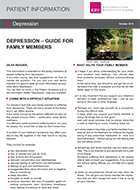
Depression – Guide for family members

Bundesärztekammer

This information is aimed at family members of people who suffer from depression. It provides tips and suggestions on how to handle this type of situation.
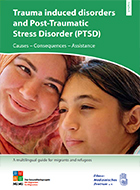
Trauma induced disorders and Post-Traumatic Stress Disorder (PTSD)

Ethno-Medizinisches Zentrum e.V. Hannover

This guide answers your questions on how mental disorders, such as post-traumatic stress disorder (PTSD), develop following traumatic experiences and how these can then be treated.
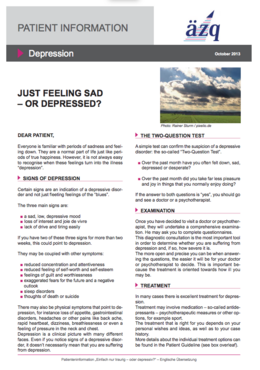
Depression - Just sad or depressed?

Bundesärztekammer

This brief fact sheet explains which symptoms indicate a depressive disorder and how it can be treated.
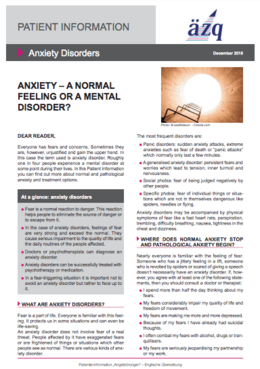
ANXIETY – A NORMAL FEELING OR A MENTAL DISORDER?

Bundesärztekammer

This fact sheet tells you more about normal and pathological anxiety and the available treatment options.

Talking to Children about War 

National Child Traumatic Stress Network/ Universitätsklinikum Ulm

This factsheet addresses ways to support young and pre-school children in special crisis situations. Exposure to a traumatic event can often lead to changes in behaviour, such as more intense crying, tantrums or disrupted sleep. The authors set out ways to offer care and support. 

Age-related reactions to traumatic events

National Child Traumatic Stress Network/ Universitätsklinikum Ulm

Children and adolescents experience traumatic events differently from adults. This leaflet tells parents, therapists and other persons of reference how children and adolescents might respond, broken down by age group, and what they can do to help them.

Mental health of children and young people with refugee or migrant experience (part 1)

Achtung! Kinderseele

Sadness, aggression or withdrawal may be signs of mental issues. What is mental health and why is it so important?

Mental health of children and young people with refugee or migrant experience (part 2)

Achtung! Kinderseele

If you worry about your child’s well-being, there are various places to turn to. In this video, you can find out where to get support.

Flight and trauma

Max-Planck-Institut für Psychiatrie

This short clip for refugees and helpers provides information on potential physical and mental symptoms caused by a refugee or migrant experience. The clip aims to offer relief to those affected and encourage them to seek support.

Eating Disorders – How is the person affected getting on?

Bundesinstitut für Öffentliche Gesundheit

Eating disorders are serious illnesses that must be treated. Professional education is vital to recognise signs of anorexia, bulimia or binge-eating disorder. This video gives an insight into the subjective perspectives of those affected and points to existing support services.

Eating Disorders – What influences parents, friends and the environment?

Bundesinstitut für Öffentliche Gesundheit

Eating disorders are serious illnesses that must be treated. Professional education is vital to recognise signs of anorexia, bulimia or binge-eating disorder. This video provides insights into the subjective perspectives of parents, friends and other people close to those affected and discusses potential support services.

Eating Disorders – What does that mean and what should be done?

Bundesinstitut für Öffentliche Gesundheit

Eating disorders are serious illnesses that must be treated. Professional education is vital to recognise signs of anorexia, bulimia or binge-eating disorder. This video provides easy-to-understand professional information on the different disease patterns and gives advice about contact points for those affected and their relatives.

Mental Health

Hochschule Esslingen

This video explains what trauma and post-traumatic stress disorders are and what those affected can do to address them. 


Information for parents and professionals to support children and adolescents affected by war

Universitätsklinikum Ulm

This brochure is aimed at parents and other caregivers of Ukrainian children, as well as professionals  and volunteers who work with refugees from Ukraine.   It addresses how to talk to children about war and how children can be supported after an acute crisis.